You have unboxed the device, skimmed the manual for about forty seconds, and you are ready to tackle your thighs with the enthusiasm of someone who just discovered a great new routine. Love that energy.
Still, if a quiet voice in your head is asking whether using a heat-based device on your skin is a wise idea on a Tuesday night, you are not overthinking. You are just paying attention.
Radiofrequency has decades of clinical safety research behind it, but the name sounds like something requiring an engineering degree and a hard hat. The fastest way to quiet that hesitation is to give your skin a two-minute test run before diving into a full session.
The two-minute patch test (your 24-hour peace-of-mind pass)
Think of this like trying a new facial serum behind your ear before slathering it over your forehead. Your skin has its own personality, and spending two minutes on a quiet trial run buys you complete confidence for the rest of your routine.
Pick an inner thigh or lower abdomen: somewhere flat, out of view, and easy to inspect.
-
Clean the slate: Wash the spot with your standard body wash to remove body lotions, oils, or yesterday's self-tanner. Pat dry.
-
Lay down the gel bridge: Smooth a thin layer of water-based conductive gel across the area. Running an RF device on dry skin is like dragging dry wiper blades across a windshield: loud, uncomfortable, and completely ineffective. The gel creates a smooth path so the current glides straight into the skin.
-
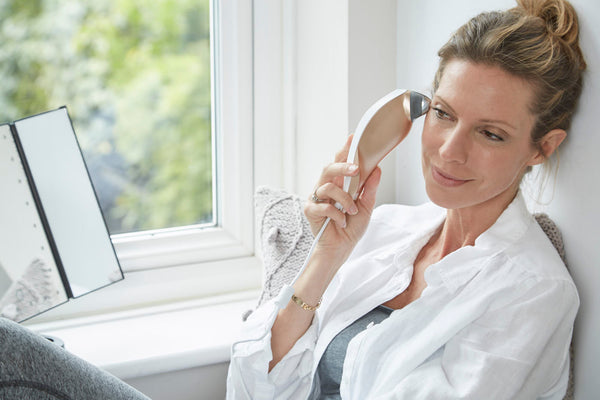
Take a two-minute spin on low: Turn your device to its lowest setting. Place the metal tips flat against your skin and glide in slow, continuous circles for two minutes. Keep it moving the whole time.
-
Wipe clean and let it breathe: Remove the gel with a damp cloth and let your skin relax.
Now let time do the work:
-
At 1 hour: The warm pink glow should already be fading back to your standard skin tone.
-
At 6 hours: Skin should feel calm, with zero lingering tenderness.
-
At 24 hours: If the spot looks clear and feels normal, you passed with flying colors. You are good to begin your first full session.
Unpacking the word "frequency"
While your patch test is doing its 24-hour wait, let's demystify the name.
"Radiofrequency" has a way of sounding intense because the word "frequency" often gets tangled up with scary concepts like radiation. In aesthetics, radio waves have nothing to do with dental X-rays, radiation badges, or mutating cells. It sits at the gentlest, non-ionizing end of the energy spectrum.
When the metal tips glide over your skin with gel, they complete a mild circuit. Your skin tissue naturally resists that current, and that gentle resistance converts the energy into deep, soothing warmth.
The surface of your skin stays comfortable while the deeper layers reach the exact temperature where collagen gets the signal to wake up and start rebuilding. It feels less like an electrical gadget and more like a warm stone sliding across your skin.
Clinic power vs. couch comfort
If you have ever talked to someone who had radiofrequency in a dermatology clinic, they might have described deep, intense heat. In-office systems are high-output machines operated by trained clinicians who deliver heavy doses of energy in single visits.
Your bathroom device follows an entirely different philosophy:
-
Steady, progressive sessions: Instead of one massive clinic blast, home tools rely on lower energy delivered once a week. Collagen builds through regular, cumulative encouragement rather than acute heat in one sitting.
-
Zero numbing needed: Clinics sometimes use numbing creams because of the high power output. You never use numbing creams at home. Your natural heat receptors stay awake, meaning you are always in complete control of your comfort.
-
Built-in temperature safeguards: Personal devices feature real-time sensors that monitor surface warmth and pause energy delivery if a spot gets too warm.
Think of it like fitness: an in-office treatment is like a heavy lifting session with a personal trainer, while your home device is a steady weekly workout you do comfortably on your sofa. Both support skin firmness, but your home tool is specifically built to be relaxing and easy to keep up.
Warm stone massage, not an endurance test
Beauty culture has spent decades convincing us that if a treatment doesn't hurt, it isn't doing anything. Radiofrequency did not get that memo.
What feels right:
-
Comfortable, rolling warmth: Over the first minute, the treatment zone warms up to feel like a soothing hot stone (roughly 40°C to 42°C, or 104°F to 108°F, in the deeper tissue).
-
A healthy post-treatment glow: Fresh circulation rushes to the area, leaving a light rosy flush that settles within 30 to 60 minutes.
-
A subtle immediate bounce: A light, temporary plumpness right after your session as local blood flow perks up the tissue.
What tells you to pause:
-
A sharp pinch or sting: Radiofrequency should feel like smooth heat, never a zap. A pinch almost always means the device stopped moving or the gel thinned out.
-
Redness lasting into the next morning: If a treated patch is still bright red twenty-four hours later, the setting was too ambitious or your skin needs a gentler touch.
-
Lingering heat hours later: Warmth should dissipate within an hour after you switch off the device.
A few good reasons to sit this one out
Because radiofrequency moves electrical current through tissue, it is not for every body on every day. A few clear situations mean skipping the treatment:
-
Implanted electronic medical devices: Pacemakers, internal defibrillators, or insulin pumps can be sensitive to electrical currents.
-
Metal implants in the treatment zone: Surgical plates, pins, or joint screws in the specific area you want to treat conduct heat faster than surrounding tissue. (Dental fillings do not affect body sessions).
-
Pregnancy and nursing: Clinical trials exclude pregnant women for ethical reasons, which means safety data does not exist here.
-
Broken or inflamed skin: Skip areas with open cuts, active eczema flares, psoriasis, or fresh sunburn.
-
Reduced heat sensitivity: If conditions like nerve changes make it hard to judge temperature, skip thermal devices.
When in doubt about a specific scar or health question, sending a quick note to your doctor is always the smart call.
The five-point pre-flight check
Keep these practical rules in your back pocket whenever you sit down for a session:
-
Clear the medical baseline: Confirm the target area is free of metal implants, active rashes, or irritation.
-
Start bare: Wash off rich body butters, oils, and self-tanners before you begin.
-
Never skip the gel: Gliding without gel is a recipe for uneven heat; keep the contact slick.
-
Keep it moving: Glide in steady, continuous circles so warmth builds evenly across the tissue.
-
Stay in the comfort zone: Settle into that 104°F to 108°F (40°C to 42°C) sweet spot. More heat does not mean faster collagen.
Slow and steady wins the collagen race
Skin responds best to patience, not sudden extremes. Trying to rush radiofrequency by cranking the setting or doubling your sessions is like turning your oven to 500 degrees to bake cookies faster: you don't get cookies sooner, you just get burnt edges.
Radiofrequency creates the ideal thermal conditions for your tissue to build its own fresh collagen over weeks of steady care. Taking two minutes for a patch test today gives you the comfort of knowing your skin is on board, comfortable, and ready for the long game.